| Anmol Chemicals is the pioneer manufacturers of Sodium Acetate, Pharmaceutical Excipients Fragrance & Flavor chemicals in India. We offer Halal and Kosher Sodium Acetate made in an ISO9001, ISO22000 (FSSC22000), cGMP and GLP certified facility. Our group has several manufacturing facilities spread across the world, supported by toll manufacturers and representatives in UAE, Europe, Africa, USA, China and has several associated manufacturing facilities spread across India. All the Information on Physics, Chemistry, Applications, Uses and Technology on Manufacture of Sodium Acetate is in these pages. |
| The units have one or more of the certifications like FDA GMP, ISO 9001, ISO 22000, HACCP, REACH, Kosher & Halal |
 ----------

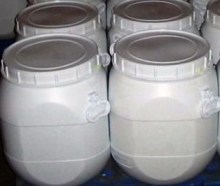
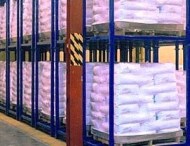

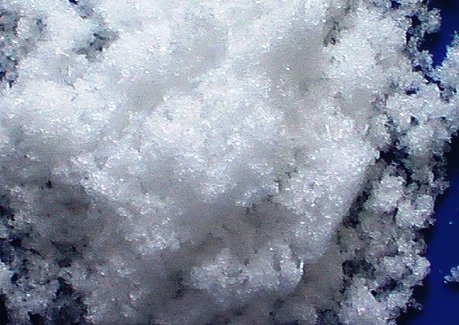
Sodium Acetate Anhydrous Trihydrate Manufacturers IP BP USP AR
CAS: 127-09-3 (Anhydrous), 6131-90-4 (Trihydrate), Chemical Formula: CH3COO-Na for Anhydrous, Molecular Weight: 82
Arabic مصنعي خلات الصوديوم
Italian Produttori di acetato di sodio
English Sodium Acetate Manufacturers
Spanish Acetato de sodio Fabricantes
French Fabricants d'acétate de sodium
Dutch Fabrikanten van natriumacetaat
German Hersteller von Natriumacetat
Portugese Fabricantes de acetato de sódio
For MSDS Sheet Click
SDS GHS, MSDS Sheet of Sodium Acetate Anhydrous Manufacturers
SDS GHS, MSDS Sheet of Sodium Acetate Trihydrate Crystals Manufacturers
Sodium Acetate
Anhydrous, Powder, Crystals, Trihydrate
IP BP Ph. Eur. USP ACS AR LR Food Grade
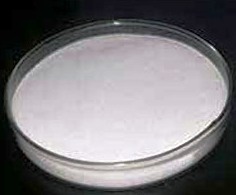
| SODIUM ACETATE TRIHYDRATE PURE |
| Assay= 99% Sodium Acetate Trihydrate minimum |
| Appearance= White Transparent Crystalline |
| A 10% Solution is clear & colourless |
| Test Solution= 7.5-9 |
| Arsenic= Less than 1 ppm |
| Calcium & Magnesium= Less than 50 ppm |
| Heavy Metals= Less than 1 ppm |
| Iron= Less than 5ppm |
| Chlorides= Less than 0.03% |
| Sulphates= Less than 0.02% |
| Packing= As required |
GRADES AND SPECIFICATIONS OF SODIUM ACETATE ANHYDROUS POWDER
| SODIUM ACETATE ANHYDROUS PURE |
| Purity= 99 % minimum purity as CH3COONa |
| Appearance= Snow-White Powder |
| Clarity of 10% Solution= A 10% Solution w/v is clear and colourless |
| pH (10% in water)= pH between 7.5-9 |
| Arsenic < 1ppm. |
| Calcium and Magnesium= To pass the test 50 ppm |
| Heavy Metals < 1ppm |
| Iron < 5ppm |
| Chloride < 100ppm |
| Sulphate < 20ppm |
| Packing= 25kg(55 lbs)-50kg bags or pellets or as required |
We offer Sodium Acetate IP Sodium Acetate BP Sodium Acetate USP Sodium Acetate Ph. Eur. and Extra Pure from a world class FDA approved, ISO-9001-2008 Certified facility
SODIUM ACETATE IP PHARMA GRADE| PARTICULARS | SODIUM ACETATE IP GRADE |
| Dry Basis Assay | 99 to 101% |
| Characteristics | Colourless Crystals |
| Solubility | Soluble in 0.8 part of water and in 19 parts of Ethanol (96%) |
| Clarity and colour of 10% w/v solution | Clear and Colourless |
| Alkalinity (pH of 5% solution) | 7.5-9.0 |
| Arsenic | 2 ppm |
| Calcium and Magnesium (calculated as Ca) | 50 ppm |
| Heavy Metals as Lead | 10 ppm |
| Iron | 10 ppm |
| Chloride | 200 ppm |
| Sulphate | 200 ppm |
| Reducing Substances | Passes test |
| Packing | In 50 Kg HDPE bag with HMHDPE liner |
Sodium Acetate USP Specifications
Sodium Acetate USP
C2H3NaO2-3H2O 136.08
Assay: Sodium Acetate contains three molecules of water of hydration, or is anhydrous. It contains not less than 99.0 percent and not more than 101.0 percent
of C2H3NaO2, calculated on the dried basis.
Identification: A solution responds to the test for Sodium and for Acetate.
pH: between 7.5 and 9.2, in a solution in carbon dioxide-free water containing the equivalent of 30 mg of anhydrous sodium acetate per mL.
Loss on drying: Dry at 120 to constant weight: the hydrous form loses between 38.0% and 41.0% of its weight, and the anhydrous form loses not more than 1.0% of
its weight.
Insoluble matter: Dissolve the equivalent of 20 g of anhydrous sodium acetate in 150 mL of water, heat to boiling, and digest in a covered beaker on a steam bath
for 1 hour. Filter through a tarred filtering crucible, wash thoroughly, and dry at 105 : the weight of the residue does not exceed 10 mg (0.05%).
Chloride: A portion equivalent to 1.0 g of anhydrous sodium acetate shows no more chloride than corresponds to 0.50 mL of 0.020 N hydrochloric acid (0.035%).
Sulfate: A portion equivalent to 10 g of anhydrous sodium acetate shows no more sulfate than corresponds to 0.50 mL of 0.020 N sulfuric acid (0.005%).
Calcium and magnesium: To 20 mL of a solution containing the equivalent of 10 mg of anhydrous sodium acetate per mL add 2 mL each of 6 N ammonium hydroxide,
ammonium oxalate TS, and dibasic sodium phosphate TS: no turbidity is produced within 5 minutes.
Potassium: Dissolve the equivalent of 3 g of anhydrous sodium acetate in 5 mL of water, add 1N acetic acid drop wise until the solution is slightly acidic, and
then add 5 drops of sodium cobalt nitrite TS: no precipitate is formed.
Aluminum: (where it is labeled as intended for use in hem dialysis)— the limit is 0.2µ =g per g.
Heavy metals: the limit is 0.001%.
Organic volatile impurities: meets the requirements.
We offer Sodium Acetate IP BP USP Ph Eur and Extra Pure from our world class FDA approved, ISO-9001-2008 ISO-22000-2005 Certified facility, Anmol Chemicals
Sodium acetate, (also sodium ethanoate) is the sodium salt of acetic acid. It is an inexpensive chemical produced in industrial quantities for a wide range of uses.
Applications
Sodium acetate is used in the textile industry to neutralize sulfuric acid waste streams, and as a photo resist while using aniline dyes. It is also a pickling agent in chrome tanning, and it helps to retard vulcanization of chloroprene in synthetic rubber production.It is the chemical that gives salt and vinegar chips (crisps) their flavor. It may also be added to foods as a preservative; in this application it is usually written as "sodium diacetate" and labeled E262.Traditional applications of Sodium Acetate buffering agent include the leather tanning and dye industries. It is used in TANNING to effect a more even and rapid penetration of the tan. In the TEXTILE industry, it is considered a dye and color intermediate, with specific use as a mordant in the dyeing process. Because of its ability to remove insoluble calcium salts, it is further used by the textile industry to improve the wearing quality of finished fabrics. It is considered one of the best agents available for the neutralization of mineral acids. It is commonly used in SOAP MAKING. The FOOD industry relies on sodium acetate as a buffer in controlling pH of food items during various stages of processing as well as for the finished consumable item. It is also used as a flavor enhancer in meat and poultry. It may be added to foods as a seasoning, and to alcoholic beverages to decrease the risk of a hangover. As the conjugate base of a weak acid, a solution of sodium acetate and acetic acid can act as a BUFFER SOLUTION to keep a relatively constant pH. This is useful especially in biochemical applications where reactions are pH dependent. The COSMETICS industry also values a good buffering agent, so it uses sodium acetate in a wide variety of personal care items. In PLASTICS manufacturing, sodium acetate is used as a retarder for elastomers (polymers with elastic properties of rubber). The PHOTOGRAPHIC industry traditionally included sodium acetate in its developer formula. Newer applications of sodium acetate include its use as a carbon source in WATER TREATMENT. Acetate is a safe and environmentally-friendly alternative to hazardous methanol for the de-nitrification of wastewater. The PETROLEUM industry relies on it as a buffering agent in petroleum production, drilling Muds, and completion fluids. It is also used in consumer HEATING PADS or hand warmers and is also used in hot ice. Sodium acetate trihydrate crystals melt at 58 °C, dissolving in their water of crystallization. When they are heated to around 100C, and subsequently allowed to cool, the aqueous solution becomes supersaturated. This solution is capable of super cooling to room temperature without forming crystals. By clicking on a metal disc in the heating pad, a nucleation center is formed which causes the solution to crystallize into solid trihydrate crystals again. The bond-forming process of crystallization is exothermic, hence heat is emitted. The latent heat of fusion is about 264–289 kJ/kg. Unlike some other types of heat packs that depend on irreversible chemical reactions, sodium acetate heat packs can be easily recharged by boiling until all crystals are dissolved. Therefore they can be recycled indefinitely. The MEDICAL & PHARMACEUTICAL industry uses it in formula for diuretic expectorants and systemic alkalizers. It is commonly used in dry blends for renal dialysis. The heat of crystallization generated by sodium acetate is widely and effectively used in the heat pack industry.
Another new application of this versatile chemical is in poultry farming. It is added to drinking water for chickens to help prevent disease conditions associated with overheating and dehydration.
It is widely used in de-icer products, especially at airports
It is also used as a buffer in petroleum production, and for kidney dialysis processes.
All in all, it indeed is a remarkable chemical with applications span a wide range of industries.
Preparation
It is sometimes produced in a laboratory experiment by the reaction of acetic acid with sodium carbonate, sodium bicarbonate, or sodium hydroxide. These reactions produce sodium acetate (aq), water, and carbon dioxide, which leaves the reaction vessel as a gas, is produced by the first two.
CH3–COOH + Na+[HCO3]– → CH3–COO– Na+ + H2O + CO2
This is the well-known "fizzing" reaction between baking soda and vinegar. 84 grams of sodium bicarbonate react with 750 g of 8% vinegar to make 82 g sodium acetate in water. By subsequently boiling off most of the water, one can refine either a concentrated solution of sodium acetate or actual crystals.
Reactions
Sodium acetate can be used to form an ester with an alkyl halide such as bromoethane:
H3C–COO– Na+ + Br–CH2–CH3 → H3C–COO–CH2–CH3 + NaBr
In such a reaction, it is usually complexed with caesium in order to increase the nucleophilicity of the carboxylate group.
For Clinical Pharmacology please check drug.com
Sodium acetate anhydrous trihydrate
Sodium acetate BP USP IP
Sodium acetate AR analytical reagent FCC food grade
We also offer sodium acetate granules for airport & concrete deicing.
Our distributor is stocking our products in Houston Area as a Chemical Supplier.
Please visit our pages on Potassium Acetate, Calcium Acetate, Sodium Gluconate & Sodium Glycerophosphate and Sodium Formate n Sodium Oleate.
Sodium Acetate Anhydrous Trihydrate manufacturers at:
Anmol Chemicals
S-8, SARIFA MANSION, 2ND FLANK ROAD, CHINCHBUNDER, MUMBAI 400009, INDIA
TEL: (OFFICE) 91-22-23770100, 23726950, 23774610, 23723564. FAX: 91-22-23728264
e-mail: anmolc@mtnl.net.in

Potassium acetate -- Sodium Bicarbonate -- Sodium Borate -- Sodium Bromide -- Sodium Diacetate -- Sodium hexametaphosphate -- Sodium Hydroxide Pellets -- Sodium nitrite Sodium nitrate -- Sodium phosphate monobasic dibasic tribasic
Exports to USA, Canada, UAE, Dubai, South Africa, Tanzania, Kenya, Nigeria, Egypt, Uganda, Turkey, Mexico, Brazil, Chile, Argentina, Europe Netherlands, Italy, Spain, Germany, Portugal, France, Malaysia, Indonesia, Thailand, Korea, Vietnam, Japan, etc.
Product Links: Sodium Acetate --- Zinc Chloride --- Ammonium Chloride --- Calcium Chloride --- Potassium Chloride --- Sodium Diacetate